


 Grocery Delivery App Source Code and Templates
Explore grocery delivery app source code with catalogs, variants, substitutions, delivery slots, picking workflows, inventory tools, payments and customer order tracking.


Grocery delivery software handles challenges that are less common in restaurant ordering: large catalogs, variable-weight products, rapid stock changes, substitutions and scheduled delivery windows. This collection focuses on app source code for supermarkets, convenience stores, local shops and grocery marketplaces. Packages can include customer, picker, courier and merchant interfaces alongside a backend and administrator dashboard.
Choose a product whose inventory and fulfillment model matches the operation. A store picking from its own shelves differs from a marketplace connecting multiple independent grocers. Developers can browse the broader app source-code collection, while prepared-meal platforms are kept in the separate food delivery page.


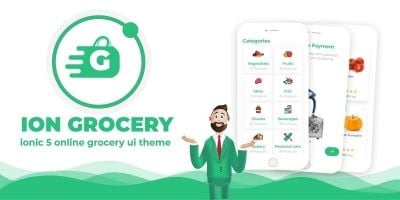

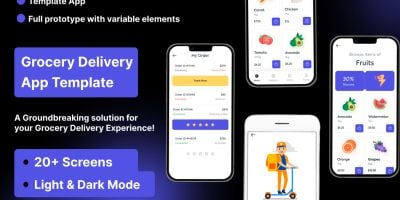
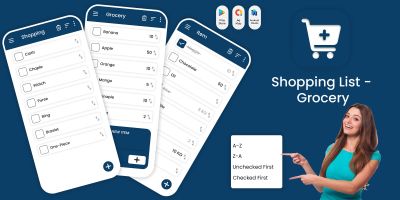
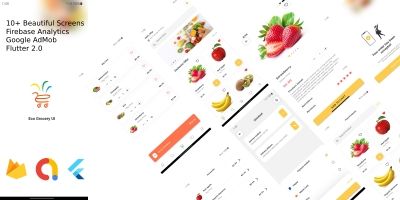





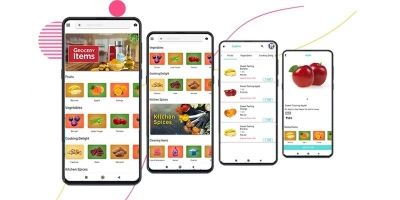
Catalog design must support thousands of products without making search and navigation slow. Review categories, brands, package sizes, units, variants and barcodes. Fresh goods may be sold by estimated or final weight, requiring price adjustments after picking. Promotions can include multibuy offers, loyalty pricing and store-specific discounts.
Availability is especially important. The system should account for out-of-stock items, replacement preferences and communication between the picker and customer. Decide whether customers can approve substitutions, set maximum price differences or request refunds. Inventory can come from an internal database, store ERP, POS system or external API.
- Product search, brands, units, barcodes and favorites
- Store selection, addresses and delivery coverage
- Scheduled delivery or pickup time slots
- Substitution, unavailable-item and refund workflows
- Picker lists, packing status and order handoff
- Courier assignment, route status and proof of delivery
- Coupons, wallets, payments and order adjustments
Time-slot capacity should reflect staff, vehicle and store limits. Check whether administrators can control available windows, minimum lead times and maximum orders per slot. A simple date selector without capacity rules can create more orders than the operation can fulfill.
Picking tools affect accuracy and speed. Useful features include aisle or category sorting, barcode confirmation, quantity adjustments, notes and direct customer contact. When final totals change because of weight or substitutions, verify how additional charges or refunds are handled by the payment provider.
Multi-store platforms need separate catalogs, stock, pricing, delivery zones and settlements. Determine whether products are shared globally or managed independently by each merchant. Review how commissions, service fees and promotions are reported. Grocery data can change frequently, so imports and synchronization should be resilient and observable.
Prioritize catalog scale, inventory synchronization and fulfillment workflows. Confirm whether the package includes shopper or picker tools in addition to customer and courier apps. Check support for units, weights, substitutions, time slots and final-total adjustments.
Review the backend integration needed to keep prices and availability current. Test performance with thousands of products and large images. Verify how payments are authorized and adjusted when the final order changes.
- Load a representative catalog before evaluating performance.
- Test substitutions and variable-weight pricing.
- Confirm delivery-slot capacity controls.
- Review merchant, picker and courier permissions.
- Plan integration with existing POS or inventory systems.
How is grocery delivery software different from food delivery software?
Grocery systems usually manage larger catalogs, stock changes, weighted products, substitutions, picking and scheduled delivery slots. Restaurant apps focus more on menus, preparation and immediate dispatch.
Can a grocery app handle out-of-stock substitutions?
Some templates include substitution preferences and picker-customer communication. Confirm how replacements, price differences and refunds affect the final payment.
Does grocery source code connect to an existing POS or inventory system?
Only when a compatible integration is provided or developed. Review the API, import tools and synchronization model needed by the store's current systems.
Can several supermarkets use the same application?
Multi-store products may provide merchant accounts, separate catalogs, delivery zones and commissions. Verify that the administrator and settlement workflows match the intended marketplace.
Test with a realistic catalog and several complex orders. Include weighed produce, an unavailable product, an approved substitute, a rejected substitute, a changed delivery slot and a partial refund. Confirm that receipts and merchant balances reflect final quantities rather than the original basket.
Operational planning should cover cold-chain handling, age-restricted goods, delivery proof, customer complaints and data privacy. Local consumer and food-retail requirements may apply. Make clear which party is responsible for picking quality and substitution decisions.
To avoid duplicate content and overlapping results, reserve this page for supermarket-style ordering and catalog fulfillment. Restaurant menus, kitchen preparation and meal-delivery marketplaces should remain on the food delivery landing page.