


 VPN App Source Code and Mobile Templates
Compare VPN app source code with server management, subscriptions, advertising, remote configuration and protocol support for Android, iOS and Flutter projects.


VPN app source code provides the mobile interface and service logic used to select servers, establish encrypted tunnels and manage user access. Products may include an Android, iOS or Flutter client, a remote server list, subscriptions, advertisements and an administration panel. The purchase usually does not include a global VPN network, bandwidth or guaranteed access to any specific protocol provider.
Evaluate the complete service rather than the connect button alone. A VPN product depends on secure infrastructure, current platform APIs and truthful privacy practices. Compare native projects in Android app templates and cross-platform choices in Flutter templates.


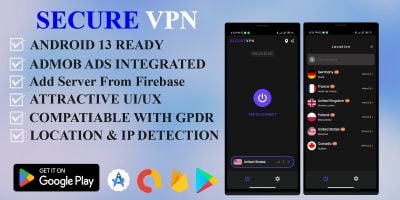

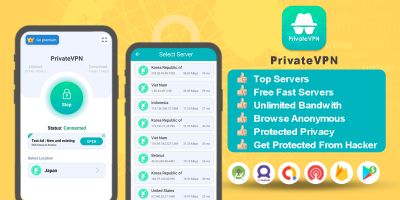


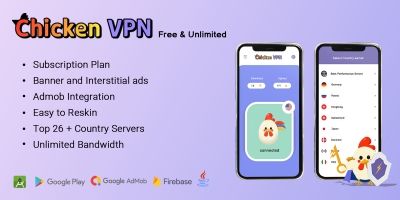


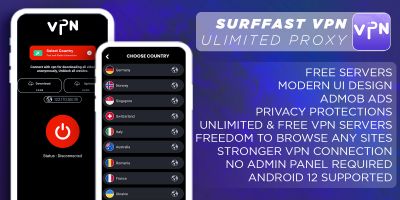
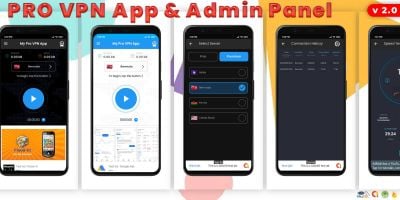
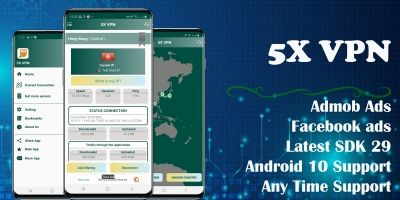

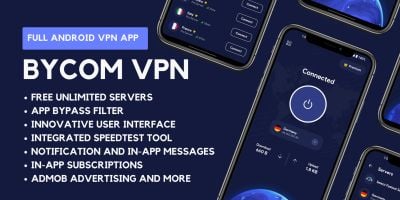


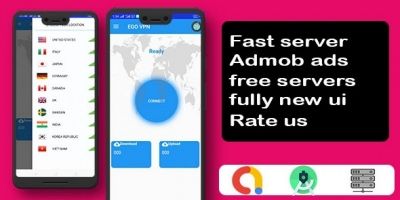

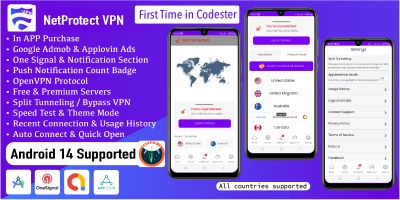

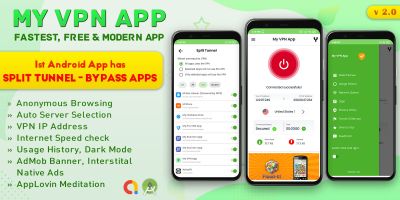

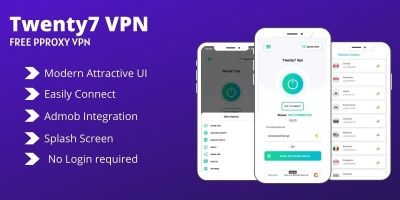
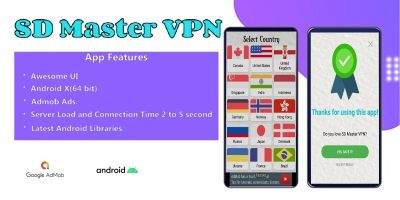


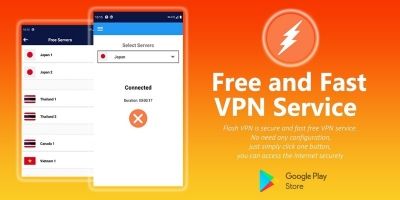
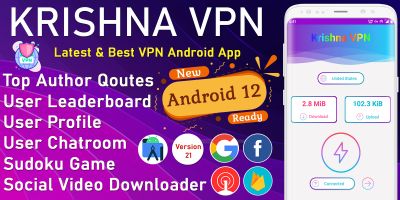


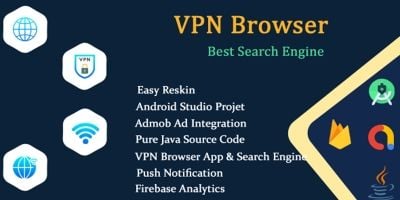
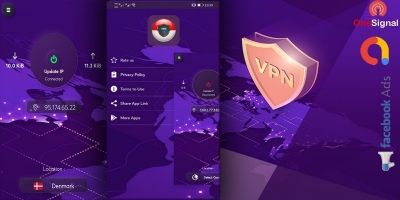
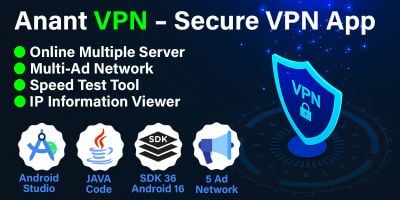
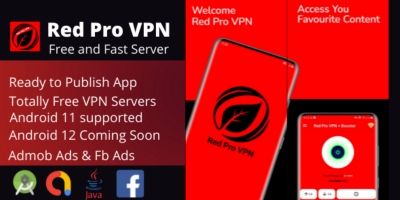
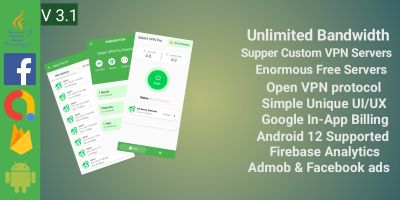
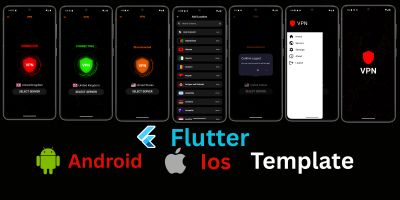
VPN templates can be built around different protocols and deployment models. Some connect to servers controlled by the buyer, while others integrate a commercial VPN API or reseller platform. Protocol choices can include WireGuard, OpenVPN, IKEv2 or provider-specific SDKs. Availability varies by operating system and can change as platforms update networking requirements.
Confirm how servers are added, tested and distributed to devices. A remote configuration or administration panel can simplify operations, but it must be authenticated and protected against unauthorized changes. The application should handle unavailable servers, failed authentication and unstable networks without exposing misleading connection status.
- Server locations, latency display and favorites
- Connection state, reconnect and timeout behavior
- Protocol selection and configuration delivery
- Free, premium and subscription access rules
- Advertising, referral or usage-limit options
- Remote server management and maintenance messages
- Diagnostics and user-facing troubleshooting
Infrastructure costs can exceed the price of the template. Estimate server capacity, bandwidth, geographic coverage, monitoring and abuse handling. Read the acceptable-use policies of hosting providers and establish a process for complaints. If the application uses a third-party VPN API, review pricing, country availability, data practices and service continuity.
Privacy claims must accurately reflect the implemented architecture. Do not advertise "no logs" unless the application, servers, analytics, support systems and providers have been assessed accordingly. Minimize collection of device identifiers and connection metadata. Explain what information is processed and for what purpose.
Mobile store policies and network-extension permissions can affect publication. Apple platforms often require specific entitlements and approved networking APIs. Android behavior varies by version, background restrictions and VPN service implementation. Verify that the code uses maintained libraries and does not rely on deprecated workarounds.
Identify the protocols and platforms required, then confirm that the template contains functioning integrations rather than static interface screens. Check whether servers, credentials, configuration files or a provider account must be supplied separately. Review the update history for recent operating-system compatibility.
Estimate bandwidth and infrastructure costs using realistic user behavior. Review subscription validation, advertising configuration and remote management security. Obtain technical and legal advice before making privacy or security claims.
- Verify supported protocols on each target platform.
- Understand who operates the VPN servers and logs.
- Check app-store entitlement and policy requirements.
- Test leak protection and connection-state accuracy.
- Plan server monitoring, abuse handling and user support.
Does VPN app source code include VPN servers?
Usually not. Many products provide the application and configuration tools, while the buyer supplies servers, bandwidth, credentials or an account with a compatible VPN provider.
Which VPN protocol should I choose?
The answer depends on platform support, performance, security requirements and infrastructure. Confirm that the product genuinely implements the needed protocol and uses maintained libraries.
Can a VPN template be published in mobile app stores?
Publication depends on current platform rules, entitlements, technical implementation, privacy disclosures and business details. Source-code ownership does not guarantee approval.
Can I advertise a VPN application as having no logs?
Only make claims supported by the complete system, including apps, servers, analytics and third-party providers. Obtain appropriate privacy and legal review before publication.
Test more than a successful connection. Cover server switching, airplane mode, sleep and wake, network changes, expired subscriptions, denied permissions and force-closed applications. Confirm that the displayed status matches the actual tunnel state. Use independent checks for DNS, IPv6 and traffic leaks where relevant.
Remove demo credentials, protect management endpoints and ensure that ordinary users cannot retrieve privileged server configuration. Create monitoring for server health and authentication failures. Provide clear support information because connectivity problems may originate from the device, local network, server or provider.
Keep VPN products separate from generic utility apps so the landing page has a coherent product set. Link back to app templates and source codes for users who need a broader mobile software selection.