


 Dating App Source Code and Templates
Compare customizable dating app templates with matchmaking, messaging, subscriptions, moderation, location tools and admin panels for Android, iOS and Flutter projects.


Dating app source code can shorten the route from an idea to a working mobile product, but the strongest choice is the package that fits the audience, safety model and revenue plan you intend to build. This collection focuses on commercial templates for matchmaking, social discovery and niche dating services. Products may include a mobile client, backend API, database, web administration panel, push notifications and payment integrations.
Start by checking whether the package contains every component shown in its demo. A polished interface alone is not enough when the server, messaging service or moderation dashboard is sold separately. Developers comparing platform options can also browse Android app templates and Flutter templates for technology-specific alternatives.


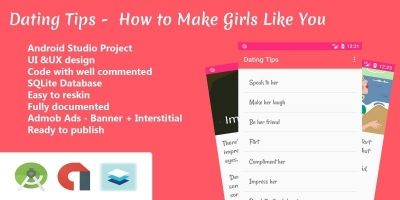

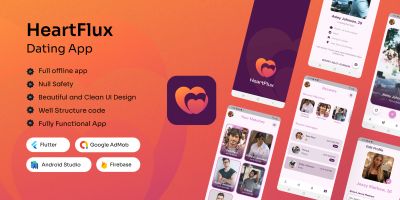
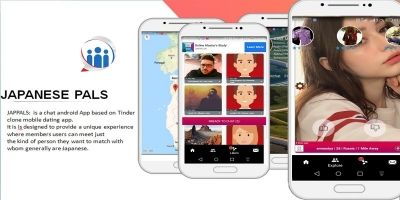





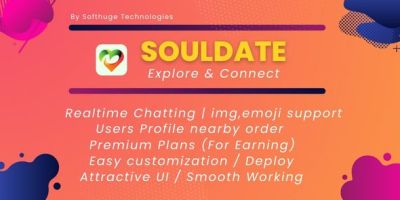


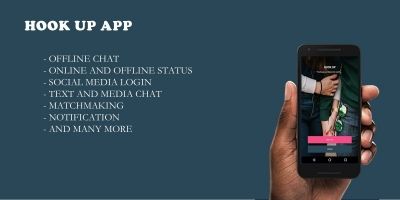
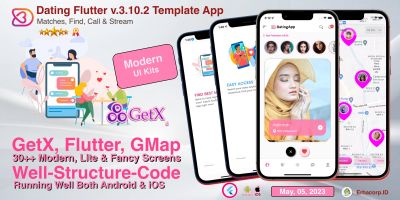



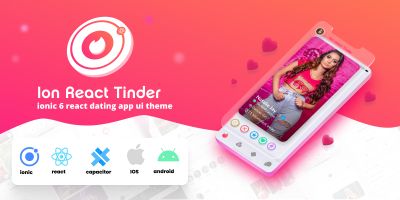


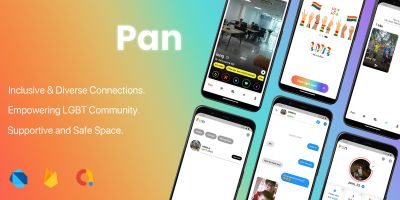

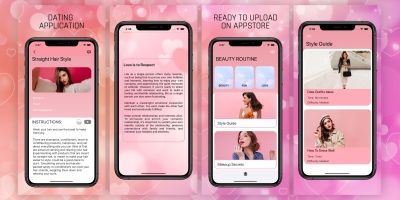
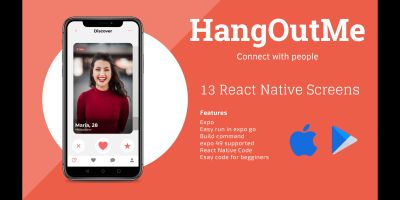
Different dating products require different discovery logic. Swipe-based apps emphasize quick decisions and visual profiles, while compatibility platforms may use questionnaires, interests, lifestyle data or curated introductions. Community-oriented services can add public posts, groups or events, and niche products often need custom profile fields that reflect a particular audience.
Evaluate how accurately the existing data model supports your concept. Rebuilding profiles, matching rules and onboarding after purchase can be more expensive than adapting colors and layouts. Check whether search filters, distance calculations and preference rules run on the server or only in the mobile interface. Server-side controls are generally easier to secure and maintain.
- Registration by email, telephone number or social provider
- Profile fields, media galleries and account verification
- Likes, matches, favorites and compatibility rules
- Private messages, read status and push notifications
- Location radius, age range and preference filters
- Premium plans, boosts, credits or in-app purchases
- Reporting, blocking, suspension and administrator review
Every item has its own feature set. Treat the list as a comparison framework and confirm the exact functionality in the product description, screenshots, live preview and documentation.
Trust and safety deserve the same attention as matching features. Review how users report profiles, how evidence is stored, whether administrators can see previous incidents and whether blocked accounts remain separated. For products using profile photos or public media, determine how uploads are validated and where files are stored. Account deletion should remove or anonymize personal information consistently across the application.
Messaging architecture affects both reliability and operating cost. Some templates use Firebase or another managed real-time service, while others include a self-hosted socket server or conventional database polling. Ask what happens when users reconnect, switch devices or receive messages while the app is closed. Also review any recurring fees for maps, SMS verification, email, storage, push notifications and chat infrastructure.
Monetization can include subscriptions, consumable credits, paid boosts or advertising. Verify that purchase validation occurs securely and that entitlement changes are synchronized with the backend. Store policies can change, so the code should make it practical to update billing libraries and server-side receipt checks. A dating service processing personal data may also need age controls, consent records, privacy disclosures and region-specific retention rules.
Confirm the included deliverables before comparing prices. A complete package may contain Android and iOS applications, a Flutter project, a backend API, a database schema and an administrator dashboard, but many items include only part of that stack. Check the supported framework versions, build tools, server requirements and installation instructions.
Review the update history and support policy. Source code that depends on old mobile SDKs, obsolete payment libraries or discontinued services may require substantial work before it can be published. Inspect the demo for moderation, reporting and account deletion rather than testing only the matching animation.
- List every required application and backend component.
- Estimate third-party service and hosting costs.
- Check app-store billing and privacy requirements.
- Verify documentation, changelog and author response quality.
- Plan an independent security and privacy review before launch.
What is normally included with dating app source code?
Inclusions vary. A package can contain one or more mobile applications, a backend API, database files, an administrator panel and installation documentation. Confirm the item contents rather than assuming every component shown in a demo is included.
Can a dating template be published in the Apple App Store and Google Play?
It may be possible after customization and testing, but publication is not guaranteed. The application must meet current store rules for billing, privacy, user-generated content, moderation and technical compatibility.
Which ongoing services might be required?
Common dependencies include hosting, databases, file storage, maps, SMS verification, email delivery, push notifications, real-time messaging and payment processing. Each provider can have separate limits and charges.
How should personal data and user safety be handled?
Use clear privacy controls, secure authentication, reporting and blocking tools, administrator workflows and reliable account deletion. Obtain professional legal and security advice for the countries in which the service will operate.
Before launch, replace demonstration credentials, regenerate API keys and inspect all administrator accounts. Test registration, password recovery, profile editing, matching, messaging, blocking, reporting, subscription renewal and account deletion on real devices. Include slow connections, denied permissions and interrupted payments in the test plan.
Visual customization should go beyond changing a logo. Rewrite onboarding, empty states, notifications and safety guidance for the intended audience. Establish community rules and a process for handling urgent reports. The final service should communicate its own identity rather than appearing to be an unchanged template.
For adjacent products with community features, review the existing PHP social networking scripts. Keep the dating page focused on matchmaking intent so that the two collections do not compete for the same queries or show an almost identical product set.