


 Cryptocurrency Exchange Scripts and Source Code
Compare cryptocurrency exchange scripts with trading, wallets, identity verification, configurable fees, transaction controls and administration tools for secure, compliant platform development.
 Scripts & Code11
 AngularJS2
 C & C++145
 C#56
C#56 CSS30
CSS30 Django0
 Golang15
 Java212
 JavaScript151
 NodeJS2834PHP Scripts8
 Ads83AI41Affiliate69Booking32Blog24Chat6Countdown62CMS39CRM18Directory21Database90eCommerce125Finance20Food55Forms12Forum73Games2GPS46Help Desk52Links248Multimedia81Login282Management18Mail98Marketplace20News7Newsletter66POS38Payment21Polls31Project Management102SaaS19Search51Security92Social Networking15Sport6Statistics36Uploaders42Website Builders648Miscellaneous103
 Python102
 ReactJS2
 Ruby28
 VB.NET7782
 App Templates2412
 Themes1109
 Plugins14206
 Graphics
Cryptocurrency exchange source code can provide a starting framework for a trading interface, peer-to-peer marketplace or digital-asset service, but it should never be treated as a ready-made guarantee of security or regulatory compliance. This collection groups commercial PHP scripts and related software that may include order books, wallets, identity checks, deposit and withdrawal workflows, fee controls and administration tools.
Because exchange software can hold assets and process sensitive identity information, independent technical, legal and financial review is essential. Examine the architecture, dependencies and custody assumptions before considering a purchase. Developers looking for other server-side products can explore PHP scripts and PHP code; general online storefront software is available separately in PHP ecommerce scripts.




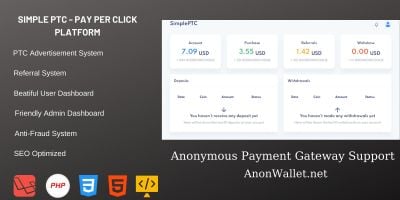
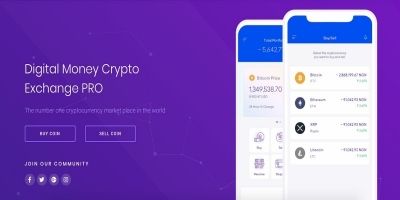
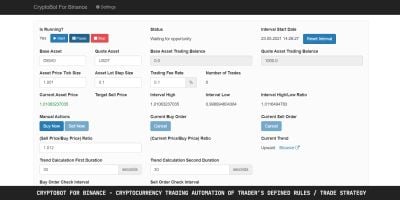
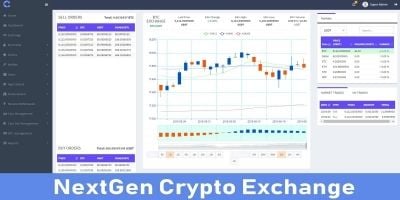
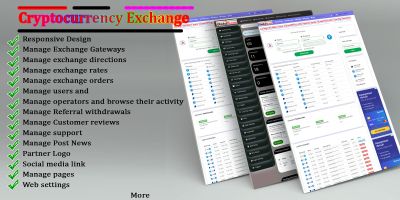
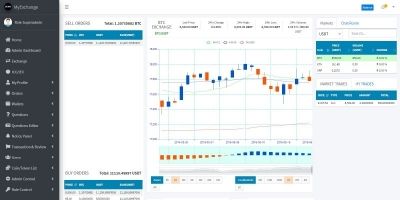


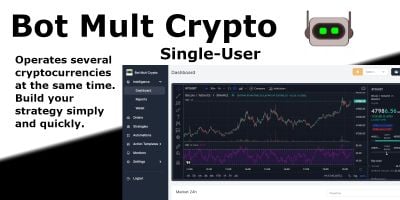

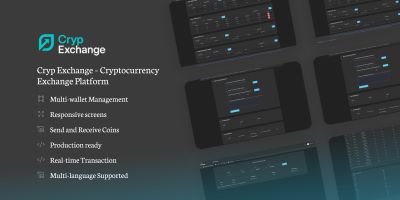

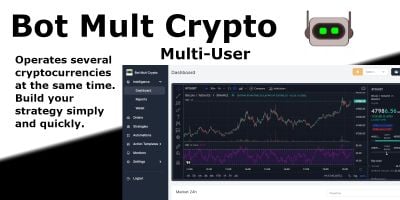

Exchange products use different operating models. A centralized spot exchange matches orders in an internal ledger and may control user deposit addresses. A peer-to-peer marketplace helps buyers and sellers agree on terms and can use escrow. Broker-style products display quoted prices rather than a public order book. These models have different security, liquidity and compliance requirements.
Clarify whether the script includes a functioning matching engine or only a trading-themed interface. Review how balances are calculated, locked during open orders and reconciled after trades. Precision and rounding rules must be consistent across databases, APIs and user interfaces. Small accounting errors can become serious financial discrepancies at scale.
- User onboarding, identity verification and account status
- Markets, order types, fees and trading limits
- Deposits, withdrawals and confirmation policies
- Internal ledger, wallet integration and reconciliation
- Two-factor authentication and withdrawal approvals
- Administrator monitoring, alerts and audit logs
- Peer-to-peer offers, escrow and dispute handling where applicable
Custody is one of the most important design decisions. Determine whether the application expects hot wallets controlled by the platform, integrations with an external custodian, manual withdrawals or non-custodial user wallets. Private keys must not be stored casually in application code or ordinary database fields. Review key rotation, withdrawal signing, address generation and incident-response procedures with specialists.
Third-party dependencies may include blockchain nodes, pricing feeds, liquidity providers, identity-verification services, email, SMS and risk-monitoring APIs. Establish what happens when a provider is delayed, unavailable or returns inconsistent data. Rate limits and usage fees can materially affect operating costs.
Regulation differs by jurisdiction and business model. A purchased script does not provide a license to operate, satisfy know-your-customer obligations or meet anti-money-laundering rules. Obtain qualified advice before collecting funds, listing assets or accepting customers. Marketing should avoid promises of profits or guaranteed security.
Begin with the business model and custody design, then verify that the software actually implements those requirements. Request documentation for the ledger, matching process, wallet integrations and administrator controls. Check the framework version, dependency status and update history.
A live demo can illustrate workflow but cannot prove security. Budget for source-code review, penetration testing, infrastructure hardening, monitoring and ongoing maintenance. Confirm whether installation support includes only basic deployment or deeper configuration of nodes, wallets and providers.
- Identify the jurisdictions and licenses relevant to the service.
- Understand where private keys and customer funds are held.
- Validate balance accounting and withdrawal controls independently.
- List all paid APIs, nodes and liquidity dependencies.
- Prepare incident-response and recovery procedures before launch.
Is a cryptocurrency exchange script ready to operate immediately?
No assumption of production readiness should be made. The source code, infrastructure, wallet design, security controls, legal status and operating procedures all require independent review and configuration.
What is the difference between a centralized and peer-to-peer exchange script?
A centralized platform commonly matches orders and manages balances internally. A peer-to-peer product connects buyers and sellers and may provide escrow and dispute workflows. Their technical and regulatory needs differ.
Does the purchase include liquidity or cryptocurrency funds?
Normally it does not. Liquidity relationships, market-making, blockchain assets, banking arrangements and provider accounts must usually be obtained separately.
Can Codester verify that an exchange script is secure or compliant?
A marketplace listing is not a security certification or legal approval. Engage qualified security, financial and legal professionals before using exchange software with real users or assets.
Security review should cover authentication, authorization, session management, injection risks, cross-site scripting, file uploads, API signing, administrative actions and wallet interactions. Use separate environments for development and production, remove all demo credentials and restrict privileged access. Logging should be detailed enough to investigate events without exposing secrets.
Test ledger invariants under deposits, partial fills, cancellations, fees, failed withdrawals and concurrent orders. Backups are not sufficient unless restoration and reconciliation are rehearsed. Monitoring should alert operators to unusual login attempts, balance changes, withdrawal patterns and provider failures.
Keep this landing page focused on exchange and trading software. Broader shopping-cart or marketplace products should remain within PHP ecommerce and shopping cart scripts so that search intent and product selection remain distinct.